
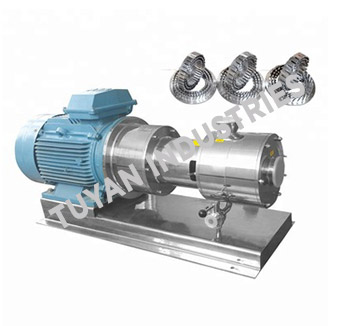
THREE STAGE INLINE MIXER
Homogenizer
TUYAN High Viscosity In-Line Mixers offer exceptional flow rates and the ability to process higher viscosity products.
TUYAN High Viscosity In-Line Mixers offer exceptional flow rates and the ability to process higher viscosity products.
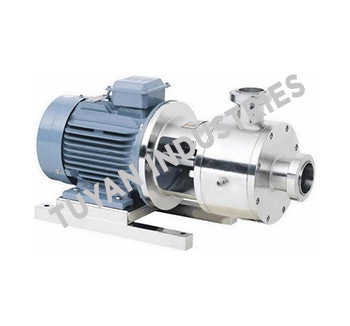
INLINE HIGH SHEAR HOMOGENIZER
Homogenizer
Tuyan High Shear In-Line mixers are supremely efficient and rapid in operation and are capable of reducing mixing times by up to 80% - 90%.
Tuyan High Shear In-Line mixers are supremely efficient and rapid in operation and are capable of reducing mixing times by up to 80% - 90%.
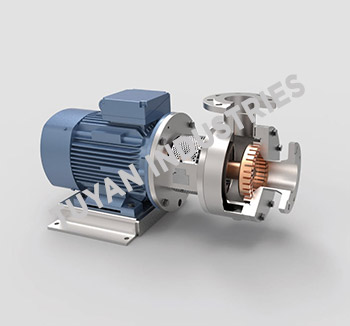
INLINE MIXER
Homogenizer
Tuyan High Shear In-Line mixers are supremely efficient and rapid in operation and are capable of reducing mixing times by up to 80% - 90%.
Tuyan High Shear In-Line mixers are supremely efficient and rapid in operation and are capable of reducing mixing times by up to 80% - 90%.